When choosing the right lead free solder material, manufacturers often face a common question —
Should I use lead free solder wire or lead free solder bar?
Both are essential for modern soldering processes and play a key role in achieving reliable, eco-friendly joints. However, they are used differently based on the application, setup, and production scale.
Let’s explore the difference between the two and how Kothari Metsol, a trusted lead free solder wire manufacturer in India, helps industries make the right choice.
Understanding Lead Free Solder Material
Lead free solder is an environmentally friendly alternative to traditional lead-based solder. It’s made from a combination of Tin (Sn), Copper (Cu), and sometimes Silver (Ag) or Nickel (Ni) — all of which are RoHS compliant and safe for electronics and industrial use.
Kothari Metsol manufactures lead free solder material using high-purity alloys that ensure:
- Smooth solder flow
- Strong and consistent joints
- Low oxidation and dross formation
- Safe handling with no lead contamination
These features make our products ideal for electronics, electrical, and automotive industries where precision and performance are critical.
What Is Lead Free Solder Wire?
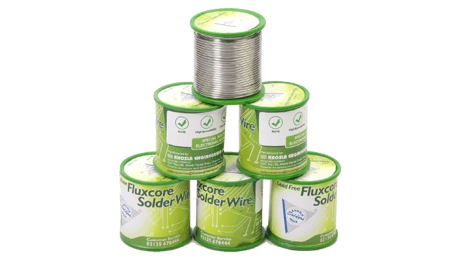
Lead free solder wire is a thin, continuous wire used in manual or semi-automatic soldering. It’s widely used for PCB assembly, electrical repairs, and fine soldering applications.
Key Features of Lead Free Solder Wire
- Made from tin-copper or tin-silver-copper (SnCu / SnAgCu) alloys.
- Available in flux-cored and solid wire forms.
- Delivers smooth melting, consistent flow, and clean finish.
- Suitable for both hand soldering and rework processes.
At Kothari Metsol, our lead free solder wire is manufactured with strict quality control and advanced processing. Each spool ensures even flux distribution and reliable wetting — essential for achieving stable electrical conductivity in sensitive circuits.
What Is Lead Free Solder Bar?
Lead free solder bars are solid metal sticks used in wave soldering, dip soldering, and high-volume production lines.
They are designed for industrial solder baths where molten solder coats multiple joints at once.
Key Features of Lead Free Solder Bars
- High purity tin-based alloys for smooth melting.
- Excellent thermal stability and low oxidation rate.
- Uniform alloy composition for consistent solder quality.
- Ideal for large-scale manufacturing and electronic assemblies.
Our lead free solder bars at Kothari Metsol are cast using high-grade alloys, ensuring superior wetting ability and longer bath life with minimal dross formation.
Lead Free Solder Wire vs Lead Free Solder Bar: A Quick Comparison
| Feature | Lead Free Solder Wire | Lead Free Solder Bar |
|---|---|---|
| Form | Continuous wire (solid or flux-cored) | Solid bar or stick |
| Use Case | Hand soldering, PCB repairs, rework | Wave soldering, dip soldering |
| Flux Content | Often flux-cored for easy application | Flux added separately |
| Precision | High precision for small components | Bulk soldering applications |
| Ideal For | Electronics, small assemblies | Industrial production, large PCBs |
| Handling | Easy to use and store | Requires solder pot or wave system |
Both are excellent lead free solder materials, but your choice depends on the application scale and production method.
Why Choose Kothari Metsol Lead Free Solder Material
As a reputed lead free solder wire manufacturer in India, Kothari Metsol is known for:
- Experience: Decades of expertise in solder manufacturing.
- Quality: 100% RoHS-compliant and high-purity materials.
- Reliability: Consistent composition and low oxide formation.
- Customization: Available in various diameters, alloys, and packaging sizes.
- Sustainability: Eco-friendly manufacturing aligned with global standards.
Whether you need lead free solder wire for precision work or lead free solder bars for large-scale production, we provide the right product that ensures performance and compliance.
How to Choose the Right Type for Your Application
When deciding between solder wire and solder bar, consider these factors:
- Type of operation: Hand soldering → Wire; Mass soldering → Bar.
- Flux requirement: Go for flux-cored wire for ease of use.
- Production scale: Bars are better for bulk applications.
- Environmental goals: Both comply with lead free, RoHS standards.
If unsure, our technical team at Kothari Metsol can guide you to the ideal lead free solder material for your specific process.
Conclusion
Choosing between lead free solder wire and lead free solder bar depends on your soldering setup, project size, and quality needs.
Both are vital in modern, eco-conscious manufacturing — and with Kothari Metsol’s precision-engineered products, you can achieve clean, strong, and sustainable joints every time.
Ready to upgrade your production with high-performance lead free solder material?
Contact Kothari Metsol today — India’s trusted lead free solder wire manufacturer — for customized solutions and quick delivery.