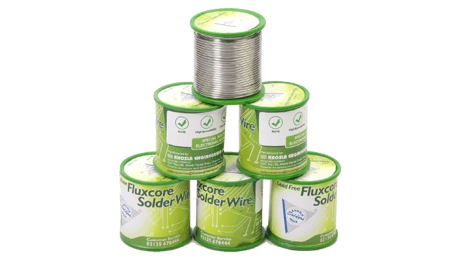
Electronics manufacturers across the globe now choose lead-free solder material because laws demand safer, cleaner, and eco-friendly production. Countries have strict rules under RoHS, WEEE, and other global standards to control hazardous substances in electronics.
Kothari Metsol supplies high-quality lead-free solder materials that match every global compliance rule. This ensures that brands can ship their products worldwide without risk.
What Is Lead-Free Solder Material?
Lead-free solder material is a solder alloy that does not contain toxic lead. Instead, it uses safer metals like tin, silver, copper, bismuth, and nickel.
These alloys offer strong joints, stable performance, and better long-term reliability.
Common Lead-Free Alloys Used Today
- SAC305 (Tin-Silver-Copper)
- SnCu (Tin-Copper)
- SnAg (Tin-Silver)
- SnBi (Tin-Bismuth)
Kothari Metsol offers a wide range of lead-free solder materials suitable for through-hole, SMT, wave soldering, and hand soldering.
Why Lead-Free Solder Is Mandatory Today
Most global markets now force manufacturers to use lead-free solder if they want to sell electronics. Here’s why:
1. Lead is toxic
Lead contaminates soil, water, food supply, and affects human health. Switching to lead-free solder material protects both workers and the environment.
2. Countries banned lead in electronics
Europe, the UK, the USA, Japan, and India now follow strict laws. Using leaded solder in many products can lead to:
- product rejection
- import restrictions
- penalties
- loss of compliance certificates
Understanding Global Regulations That Make Lead-Free Solder Essential
1. RoHS Directive (Restriction of Hazardous Substances)
RoHS is the most important global rule that forces companies to switch to lead-free solder.
RoHS bans lead in electronics above 0.1%.
This rule applies to:
- consumer electronics
- medical devices
- industrial machines
- automotive electronics
- telecom equipment
If you want to sell your product in Europe or the UK, RoHS compliance is mandatory.
2. WEEE Directive (Waste Electrical & Electronic Equipment)
WEEE focuses on responsible recycling.
This law encourages manufacturers to:
- reduce hazardous materials
- use safer solder alloys
- reuse components
- follow eco-friendly recycling
Lead-based solder makes recycling difficult.
Lead-free solder material simplifies recovery and improves product safety.
3. REACH Regulation (Registration, Evaluation & Authorization of Chemicals)
REACH controls chemicals used in manufacturing.
It restricts harmful substances that affect health or the environment.
Lead is classified as a Substance of Very High Concern (SVHC).
This puts pressure on manufacturers to shift to lead-free solder materials immediately.
4. India’s E-Waste Management Rules
India also follows RoHS-like restrictions.
Electronics with high lead content are now banned under:
- E-Waste Management Rules 2022
- CPCB Restriction Guidelines
Brands using lead-free solder automatically meet these norms.
Leaded vs Lead-Free Solder Paste: What’s the Real Difference?
Here is a simple breakdown:
Leaded Solder Paste
- lower melting point
- easier to work with
- not allowed in RoHS markets
- unsafe for workers and the environment
Lead-Free Solder Paste
- meets RoHS, WEEE, REACH
- safer for health
- long-lasting joints
- slightly higher melting point
- accepted in global markets
If you want to export electronics, lead-free solder paste is the only safe option.
Lead-Free Solder Material Properties (In Simple Words)
Lead-free solder offers reliable performance when produced with the right alloy mix.
Key properties include:
- High strength
- Stable electrical conductivity
- Better heat resistance
- Low toxicity
- High reliability under stress
- Smooth solder flow
Kothari Metsol designs lead-free solder alloys that match global IPC standards for:
- SMT assemblies
- wave soldering
- hand soldering
- automotive and industrial PCBs
Benefits of Switching to Lead-Free Solder (For Manufacturers)
Here are direct advantages:
1.Global market acceptance
You can export to Europe, UK, Japan, USA, and Middle East.
2.Better brand reputation
Eco-friendly manufacturers gain buyer trust faster.
3.Worker safety
Lead-free solder reduces exposure to harmful fumes.
4.Long-term reliability
Modern lead-free solder alloys offer stronger joints.
5.Compliance-ready electronics
Avoid penalties, shipment rejection, or compliance failure.
Industries That Must Use Lead-Free Solder Today
- PCB manufacturing companies
- EMS and OEM units
- Medical device makers
- Automotive electronics
- Solar electronics
- Consumer electronics
- Telecom equipment manufacturers
- Aerospace and defence
Why Choose Kothari Metsol for Lead-Free Solder Materials?
Kothari Metsol is a trusted manufacturer with years of hands-on experience in metal joining products.
Our lead-free solder materials ensure:
- RoHS & WEEE compliance
- strong and clean solder joints
- low dross formation
- stable melting behaviour
- high production efficiency
- reliable performance in all climates