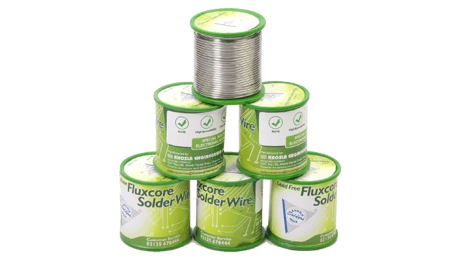
Lead Free Solder Wire: Top Applications in 2026
If you’re sourcing solder for a production line in 2026, chances are RoHS compliance isn’t optional anymore – it’s a contractual requirement. Whether you’re assembling consumer electronics, automotive control units, or industrial power modules, your customers and export markets expect lead-free construction as standard. That shift has made lead free solder wire one of the most searched, and most misunderstood, materials in electronics manufacturing today. Engineers ask the same questions on every project: Which alloy actually holds up under thermal cycling? Does flux-core lead-free solder wet as well as leaded solder? Will switching alloys mean requalifying the whole process?
This guide answers those questions with practical, field-tested detail – not marketing copy. You’ll learn where lead-free solder wire is used across industries, how it compares to traditional leaded solder, how to choose the right alloy and flux combination, and what mistakes cause rework on the line.
What Is Lead Free Solder Wire?
Lead free solder wire is a soldering alloy made without lead (Pb), typically based on tin combined with copper, silver, or bismuth – such as SAC (Tin-Silver-Copper) or Sn-Cu alloys. It’s used to create electrical and mechanical joints between components and printed circuit boards without the environmental and health risks associated with lead.
Unlike traditional 60/40 tin-lead solder, lead-free solder wire meets RoHS (Restriction of Hazardous Substances) and REACH requirements, which makes it mandatory for electronics sold into the EU, and increasingly the default choice across Indian and global electronics manufacturing.
How Lead Free Solder Wire Works
Lead free solder wire works the same way any solder does – it melts, wets the metal surfaces of a component lead and a PCB pad, and solidifies to form a conductive, mechanically stable joint. The difference lies in the alloy composition and the process window.
Because lead-free alloys like SAC305 have a higher melting point (around 217–221°C, compared to roughly 183°C for tin-lead), the soldering process needs tighter temperature control. Flux plays a bigger role here – a good no-clean or RA flux core helps the alloy wet properly despite the narrower working range, which is why flux formulation matters as much as the alloy itself.
Lead-Free vs Leaded Solder: Key Differences
Manufacturing teams switching alloys need to understand the trade-offs, not just the compliance requirement. Here’s a straightforward comparison:
| Parameter | Lead-Free Solder (e.g., SAC305) | Leaded Solder (Sn63/Pb37) |
| Melting Point | ~217–221°C | ~183°C |
| RoHS Compliance | Compliant | Non-compliant |
| Joint Strength | Slightly higher tensile strength | Good, well-established |
| Thermal Fatigue Resistance | Better in high-temp cycling | Moderate |
| Wetting Behavior | Requires precise flux & temperature | Wets more easily |
| Visual Joint Appearance | Duller, slightly grainy finish | Bright, smooth finish |
| Process Sensitivity | Higher – needs tighter control | Lower |
| Environmental & Health Impact | Low toxicity, safer disposal | Lead exposure risk |
| Typical Use Cases | Consumer electronics, automotive, export products | Legacy repair, non-RoHS markets |
The takeaway: lead-free solder isn’t simply a “safer swap.” It performs differently on the line, and process parameters – temperature profile, dwell time, flux activity – need to be adjusted, not just the wire.
Solid Core vs Flux Core Lead-Free Solder Wire
Another decision point buyers often get wrong is core type.
Solid core lead-free solder wire contains no internal flux. It’s typically used with a separately applied liquid or paste flux, common in wave soldering setups or specialized industrial applications where flux type needs to be controlled independently.
Flux core lead-free solder wire has flux embedded within the wire, released as it melts. This is the standard choice for hand soldering and rework stations because it delivers consistent flux activation without a separate application step.
| Feature | Solid Core | Flux Core |
| Flux Application | External, applied separately | Built into the wire |
| Best For | Wave soldering, industrial dip processes | Hand soldering, rework, PCB assembly |
| Process Control | Independent flux selection | Consistent, built-in activation |
| Convenience | Requires added flux step | Ready to use |
Most electronics assembly lines rely on flux-core wire for hand and touch-up soldering, while solid core remains relevant in bulk industrial processes.
Top Applications of Lead-Free Solder Wire in Electronics Manufacturing (2026)
1. Consumer Electronics Assembly
Smartphones, laptops, wearables, and home appliances almost universally use lead-free solder wire now, driven by RoHS compliance and global export requirements. SAC alloys are standard here because they balance melting point, joint strength, and cost.
2. Automotive Electronics
EV control modules, sensor assemblies, battery management systems, and infotainment PCBs demand solder joints that survive vibration and thermal cycling under the hood. Lead-free alloys with added nickel or bismuth are often specified for this thermal fatigue resistance.
3. LED and Lighting Manufacturing
LED driver boards and lighting assemblies use lead-free solder wire for both compliance and thermal performance, since LED components are sensitive to excess heat during reflow.
4. Power Electronics and Transformers
Transformer winding terminations, capacitor manufacturing, and power supply assembly rely on lead-free solder for joints that need to handle higher current loads reliably over years of service.
5. HVAC and Refrigeration Controls
Control boards inside HVAC and refrigeration units are increasingly built with lead-free solder to meet both compliance requirements and durability needs in temperature-variable environments.
6. Cable and Wire Harness Manufacturing
Terminal lug soldering and cable assembly work benefit from flux-core lead-free wire that delivers clean, low-void joints without additional flux application.
7. Industrial Control Panels and Instrumentation
PLC boards, sensor modules, and industrial instrumentation panels use lead-free solder wire where long-term reliability under continuous operation is critical.
8. Export-Oriented Electronics Manufacturing
Any Indian manufacturer exporting to the EU, US, or other RoHS/REACH-regulated markets needs lead-free solder as a baseline requirement, not an upgrade.
How to Choose the Right Lead Free Solder Material
Selecting lead-free solder material isn’t just about picking “SAC305 by default.” Consider these factors:
- Application environment: High-vibration or high-temperature applications (automotive, industrial) benefit from alloys with added nickel or bismuth for fatigue resistance.
- Component sensitivity: Heat-sensitive components need alloys and flux combinations that allow lower peak reflow temperatures.
- Core type: Hand soldering favors flux-core wire; automated wave soldering may use solid core with separate flux.
- Wire diameter: Fine-pitch SMD rework needs thinner diameters (0.3–0.6mm), while general assembly work often uses 0.8–1.2mm.
- Flux activity level: No-clean flux suits high-volume automated lines; RA (rosin activated) flux may be preferred where maximum wetting is needed and post-solder cleaning is feasible.
- Certifications: Confirm RoHS, REACH, and any customer-specific quality certifications are documented by the manufacturer.
Working with an experienced lead free solder wire manufacturer in India who can guide alloy and flux selection for your specific application saves significant qualification time and rework cost down the line.
Best Practices for Reliable Lead-Free Solder Joints
- Set iron tip temperature 20–40°C above the alloy’s melting point, not more – excess heat degrades flux and stresses components.
- Keep the soldering iron tip clean and properly tinned to maintain consistent heat transfer.
- Ensure adequate contact time; lead-free alloys wet slightly slower than leaded solder, so rushing the joint often causes cold joints.
- Use proper pad and lead surface preparation – oxidation is more visible in lead-free joints and directly affects wetting.
- Match flux type to your cleaning process; no-clean flux residues don’t need washing, but RA flux residues typically do.
- Store solder wire in a cool, dry area to prevent flux degradation and oxidation of the alloy surface.
Common Mistakes to Avoid
- Using leaded-solder temperature profiles for lead-free alloys. This causes poor wetting and dull, grainy joints that look defective even when they’re not.
- Ignoring flux compatibility. Not all fluxes perform equally across alloys; mismatched flux activity leads to voids and weak joints.
- Overheating components to compensate for slower wetting. This damages sensitive parts and shortens component life.
- Buying solder purely on price without checking alloy purity. Impurities in tin-based alloys directly affect conductivity and long-term joint reliability.
- Skipping requalification when switching suppliers. Even within lead-free alloys, formulation differences between manufacturers can affect process parameters.
Handling and Storage Tips
Lead-free solder wire should be stored away from moisture and extreme temperature fluctuations, ideally in its original packaging until use. Flux-core wire, in particular, can lose activation performance if exposed to humidity over long periods. For production floors, maintaining FIFO (first-in, first-out) stock rotation helps ensure flux freshness and consistent solderability batch to batch.
Frequently Asked Questions
1. What is lead free solder wire used for?
Lead free solder wire is used to join electrical and electronic components on PCBs and assemblies without using lead, meeting RoHS and REACH compliance for consumer electronics, automotive, industrial, and export-oriented manufacturing.
2. Is lead-free solder as strong as leaded solder?
Yes, in most cases lead-free alloys like SAC305 offer comparable or slightly higher tensile strength than traditional tin-lead solder, though the process requires more precise temperature control.
3. What temperature is needed for lead-free soldering?
Most lead-free alloys melt around 217–221°C, so iron tip temperatures are typically set between 320–370°C depending on component thermal sensitivity and joint size.
4. Does lead-free solder require different flux?
Not necessarily a different flux family, but flux activity and quantity often need adjustment since lead-free alloys wet more slowly than leaded solder.
5. What industries require lead-free solder material?
Consumer electronics, automotive, HVAC, power electronics, LED manufacturing, and any export-focused industry regulated under RoHS or REACH require lead-free solder material.
6. What is the difference between solid core and flux core lead-free solder wire?
Solid core has no internal flux and needs external flux application, while flux core has flux embedded inside the wire for ready-to-use soldering, commonly preferred for hand assembly and rework.
7. Why do lead-free solder joints look duller than leaded joints?
This is a normal characteristic of lead-free alloys due to their different crystalline structure upon cooling, not necessarily a sign of a defective joint – though process control still matters.
8. How do I choose a reliable lead free solder wire manufacturer in India?
Look for manufacturers with proven industrial experience, RoHS-compliant certification, consistent alloy purity, and the technical support to help select the right alloy, flux type, and wire diameter for your specific application.
Conclusion
Lead-free solder wire has moved from being a compliance checkbox to a core manufacturing decision that affects joint reliability, production yield, and long-term product performance. Getting it right means understanding alloy behavior, matching flux to your process, and working with a manufacturer who understands industrial soldering – not just supplying wire off a shelf.
Kothari Metsol Pvt. Ltd. has been manufacturing solder wires, solder sticks, and industrial soldering solutions since 1967, combining German technical heritage with rigorous quality control to serve electronics, automotive, HVAC, and industrial manufacturers across India and beyond. If your team is evaluating lead-free solder material for a new line, switching alloys, or troubleshooting joint reliability issues, our technical team can help you select the right product for your application.
Explore our range of RoHS-compliant lead-free solder wire and request technical guidance or a quotation.