Solid Solder Wire vs Flux Core
In manufacturing, even a small choice like selecting the right solder wire can significantly impact product quality, production speed, and overall costs. Whether you’re manufacturing electronic components, electrical equipment, automotive parts, or industrial assemblies, choosing between solid solder wire and flux core solder wire is an important decision.
While both types are designed to create strong and reliable solder joints, they differ in composition, application methods, and performance. Understanding these differences can help you choose the best option for your production line.
In this blog, we’ll compare both types of solder wire, discuss their advantages, and help you determine which one best suits your manufacturing requirements.
What is Solid Solder Wire?
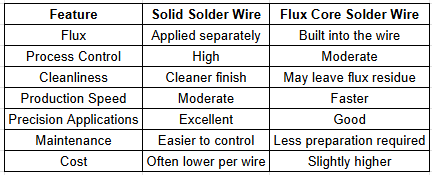
Solid solder wire is a metal wire made entirely from solder alloy without any flux inside. During the soldering process, flux must be applied separately to clean metal surfaces and improve solder flow.
Because the flux application is controlled independently, solid solder wire is widely preferred in industries where precision, cleanliness, and high-quality joints are essential.
What is Flux Core Solder Wire?
Flux core solder wire contains a hollow center filled with flux. As the wire melts during soldering, the flux is automatically released to clean the surface, remove oxidation, and improve wetting.
This integrated design eliminates the need for applying flux separately, making the soldering process faster and more convenient for many general manufacturing applications.
Understanding Solder Wire Material
The quality of the solder wire material plays a crucial role in determining the strength and reliability of solder joints.
Depending on the application, solder wire may consist of:
- Tin-Lead Alloys
- Lead-Free Tin Alloys
- Tin-Silver Alloys
- Tin-Copper Alloys
- Tin-Silver-Copper (SAC) Alloys
Selecting the right solder material depends on factors such as operating temperature, mechanical strength, electrical conductivity, corrosion resistance, and industry compliance.
Solid Solder Wire vs Flux Core Solder Wire
Advantages of Solid Solder Wire
Many industries prefer solid solder wire because it offers greater control over the soldering process.
1. Better Process Control
Since the flux is applied separately, manufacturers can precisely control the amount required for different applications.
This results in:
- Consistent solder joints
- Better quality assurance
- Reduced material wastage
2. Cleaner Finished Products
Many precision industries require minimal residue after soldering.
Solid solder wire produces cleaner joints when paired with the appropriate flux and cleaning process.
3. Ideal for Automated Production
Modern automated soldering systems often use separate flux dispensers.
Solid solder wire integrates easily into these production lines while maintaining consistent quality.
4. High Reliability
Industries such as:
- Electronics
- Aerospace
- Medical devices
- Electrical equipment
often choose solid solder wire because it provides reliable, long-lasting solder joints.
Advantages of Flux Core Solder Wire
Flux core solder wire also offers several important benefits.
- Faster Production: The built-in flux simplifies the soldering process, reducing preparation time.
- Easy to Use: Since separate flux application isn’t required, operators can work more efficiently.
- Suitable for Manual Soldering: Flux core solder wire is widely used for repair work, maintenance, and general manufacturing.
- Improved Wetting: The flux helps remove oxidation while improving solder flow over metal surfaces.
When Should You Choose Solid Solder Wire?
Solid solder wire is an excellent choice if your production line requires:
- High-precision soldering
- Minimal flux residue
- Controlled manufacturing processes
- Automated soldering systems
- Superior joint reliability
- Consistent product quality
Industries manufacturing electronic assemblies, electrical components, and critical industrial equipment often benefit from using solid solder wire.
When is Flux Core Solder Wire a Better Choice?
Flux core solder wire is ideal when:
- Faster production is a priority
- Manual soldering is common
- Separate flux application is inconvenient
- General-purpose soldering is sufficient
- Production costs need optimization
Factors to Consider Before Choosing
Before selecting your solder wire, evaluate the following:
1. Type of Production: Automated production lines generally benefit from solid solder wire, while manual operations may find flux core solder wire more practical.
2. Product Quality Requirements: If your products demand highly reliable electrical or mechanical joints, solid solder wire offers greater process control.
3. Cleaning Requirements: Some industries require extremely clean assemblies after soldering. Solid solder wire allows manufacturers to choose the most suitable cleaning process based on the application.
4. Manufacturing Cost: Although flux core solder wire can reduce processing steps, total manufacturing cost should include:
- Material cost
- Flux usage
- Cleaning
- Production speed
- Rework rates
Evaluating the complete process helps determine the most cost-effective option.
Choosing the Right Solder Material
The choice of solder material is just as important as selecting the wire type.
A high-quality solder material provides:
- Excellent conductivity
- Strong mechanical joints
- Better corrosion resistance
- Consistent melting characteristics
- Improved production efficiency
Working with a trusted manufacturer ensures your solder wire meets industry standards and performs consistently across production batches.
Why Choose Kothari Metsol?
Kothari Metsol is a trusted manufacturer of premium-quality solder products designed for diverse industrial applications. With a strong focus on quality, consistency, and customer satisfaction, the company supplies reliable solder solutions that meet the demanding requirements of modern manufacturing.
Why industries trust Kothari Metsol:
- High-quality solder wire material
- Consistent product performance
- Strict quality control
- Reliable supply for bulk orders
- Technical expertise and customer support
- Solutions for various industrial applications
Whether you need solder wire for electronics, electrical assemblies, automotive components, or precision manufacturing, Kothari Metsol delivers products that help improve productivity and product reliability.
Conclusion
Both solid solder wire and flux core solder wire offer unique advantages, but the right choice depends on your production process, quality standards, and operational goals.
If your manufacturing line prioritizes precision, cleanliness, and maximum control, solid solder wire is often the preferred solution. On the other hand, if speed and convenience are your primary concerns, flux core solder wire may be the better option.
Choosing high-quality solder wire, manufactured using premium solder wire material and reliable solder material, ensures stronger joints, improved production efficiency, and long-term product performance.
If you’re looking for premium industrial solder wire solutions, Kothari Metsol offers dependable products backed by quality manufacturing and industry expertise.
Contact Kothari Metsol to find the right solder wire solution for your production line.