Tin Solder Explained: Alloys, Uses & How to Choose
Ask for “tin solder” and you’ll get very different answers depending on who you ask – a hobbyist might mean a thin spool for hand soldering, while an industrial buyer means a solder stick used for bulk dip soldering or cable terminal work. Both are tin-based, but the alloy, form factor, and application couldn’t be more different.
Tin solder is the broad category, and getting the right grade for your specific job – whether that’s electronics assembly, cable termination, or general metal joining – depends on understanding alloy composition, melting behavior, and the form the solder actually needs to take for your process.
This guide breaks down the major tin solder alloy types, where each is used, and how to choose the right soldering stick grade for your application, with particular focus on 63/37 tin lead solder stick, still one of the most widely specified alloys in industrial soldering.
What Is Tin Solder?
Tin solder is a metal alloy, primarily composed of tin, used to join metal components by melting and forming a bonded joint upon cooling. Tin is the base metal in nearly all soldering alloys because of its relatively low melting point, good wetting characteristics, and ability to form reliable, conductive joints with common industrial metals.
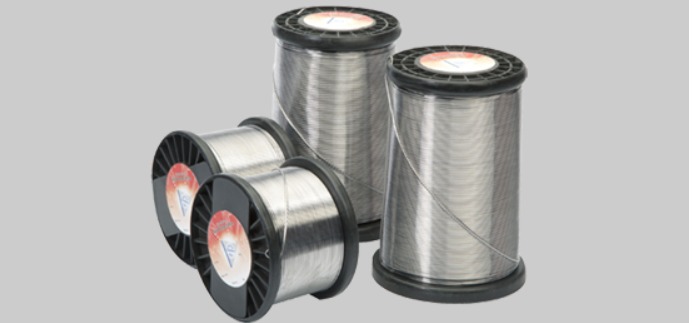
Tin solder is available in multiple forms – thin wire for hand soldering, solid or flux-core wire for automated processes, and solder sticks or bars for bulk dip soldering, wave soldering, and cable termination work.
Common Tin Solder Alloy Types
63/37 tin-lead solder – 63% tin, 37% lead – is a eutectic alloy, meaning it transitions directly from solid to liquid at a single temperature (183°C) without a mushy intermediate phase. This gives it excellent, predictable wetting behavior, which is why it remains a standard choice for industrial and repair applications where lead is permitted.
60/40 tin-lead solder is a close alternative to 63/37, with a slightly wider melting range, still commonly used in general industrial soldering.
Lead-free alloys (SAC – tin-silver-copper) are used where RoHS compliance is required, offering a higher melting point around 217–221°C and different wetting characteristics compared to leaded solder.
High-tin content industrial alloys are sometimes specified for specific corrosion resistance or mechanical strength requirements in non-electronic industrial joining applications.
What Is 63/37 Tin Lead Solder?
63/37 tin lead solder stick is a eutectic alloy widely used in industrial soldering applications where lead-free compliance isn’t required – general electrical repair, cable and terminal work, transformer manufacturing, and various metal fabrication tasks. Its single-point melting transition makes it more forgiving during hand soldering, since there’s no ambiguous “pasty” phase where movement can disturb the joint before it fully solidifies.
Because 63/37 remains widely specified across Indian industrial manufacturing, sourcing from an experienced 63/37 solder stick manufacturer in India ensures consistent alloy purity and melting behavior batch after batch.
Solder Sticks vs Solder Wire: When to Use Which
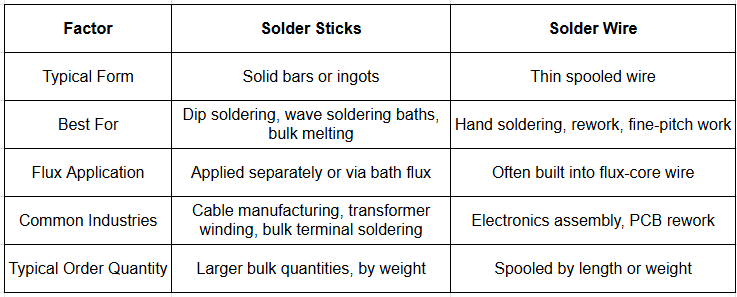
A soldering stick is generally the right choice when you’re melting solder in bulk for dip or bath processes, while wire suits precision hand or automated joint-by-joint soldering.
Applications of Tin Solder Across Industries
Electrical and cable manufacturing – terminal lug soldering and cable termination work commonly use tin solder sticks for bulk dip processes.
Transformer and capacitor manufacturing – winding terminations often rely on 63/37 tin lead solder for its reliable, predictable melting behavior.
General electronics repair and assembly – where lead-free compliance isn’t mandated, 63/37 remains a practical choice for its excellent wetting.
Metal fabrication and general industrial joining – solder sticks are used across various fabrication tasks requiring bulk solder application.
HVAC and refrigeration – certain component assembly and repair work uses tin solder for reliable joint formation.
How to Choose the Right Solder Stick Grade
- Confirm whether your application permits leaded solder. Consumer electronics for regulated export markets typically require lead-free alloys; general industrial and repair work often still uses 63/37.
- Match the alloy to your process temperature requirements. 63/37’s eutectic melting point offers predictable behavior for dip and wave soldering setups.
- Verify alloy purity documentation. Impurities affect wetting consistency and joint reliability, particularly important for bulk dip soldering where a large volume is molten simultaneously.
- Consider your flux requirements separately. Solder sticks generally need external flux application, so confirm compatibility with your existing flux process.
- Request sample batches for larger orders to verify melting behavior and wetting performance on your actual equipment before committing to volume.
What Affects Solder Stick 63/37 Price
Buyers comparing solder stick 63/37 price across suppliers should understand what genuinely drives cost differences:
Tin and lead commodity pricing fluctuates with global metal markets and directly affects solder alloy cost, since tin in particular can see significant price movement.
Alloy purity and quality control – manufacturers with rigorous purity testing and consistent batch documentation typically price differently than those without.
Manufacturer vs reseller markup – buying directly from a manufacturer generally avoids the additional margin a reselling supplier adds.
Order volume – bulk industrial quantities typically offer better per-unit pricing than small retail-sized orders.
When comparing solder stick 63/37 price quotes, ensure you’re comparing identical purity specifications and quantities, since a lower quote sometimes reflects reduced alloy purity rather than genuine cost efficiency.
Best Practices for Using Solder Sticks
- Maintain bath or dip temperature consistently within the alloy’s recommended range to ensure predictable wetting.
- Skim dross (oxidized surface material) regularly from molten solder baths to maintain alloy purity during extended use.
- Store solder sticks in a dry environment to prevent surface oxidation before use.
- Verify flux compatibility with your specific alloy and process, since flux selection affects wetting performance as much as the alloy itself.
- Test joint quality periodically during extended production runs to catch any drift in bath composition or temperature.
Frequently Asked Questions
1. What is tin solder used for?
Tin solder is used to join metal components across electronics, electrical, automotive, HVAC, and general industrial applications, forming reliable electrical and mechanical connections upon cooling.
2. What is 63/37 tin lead solder, and why is it commonly used?
63/37 tin lead solder is a eutectic alloy that melts and solidifies at a single temperature point, offering predictable, reliable wetting behavior widely used in industrial soldering where lead-free compliance isn’t required.
3. What is the difference between solder sticks and solder wire?
Solder sticks are solid bars typically used for bulk dip or wave soldering processes, while solder wire is spooled and used for hand soldering, rework, or fine-pitch assembly work.
4. What determines solder stick 63/37 price?
Tin and lead commodity market pricing, alloy purity and quality control, order volume, and whether you’re buying from a manufacturer or a reselling supplier all affect solder stick 63/37 price.
5. Is 63/37 tin lead solder still legal to use in India?
Leaded solder remains permitted for many industrial and non-export applications in India, though consumer electronics destined for regulated export markets typically require RoHS-compliant lead-free alternatives.
6. How do I choose the right soldering stick for my application?
Match the alloy to your compliance requirements, confirm melting point suitability for your process, verify purity documentation, and consider whether solid sticks or flux-core wire better fits your soldering method.
7. What industries commonly use lead solder stick products?
Cable manufacturing, transformer and capacitor winding, general electronics repair, and metal fabrication commonly use lead solder stick products for bulk soldering applications.
8. How do I find a reliable 63/37 solder stick manufacturer in India?
Look for a manufacturer with documented alloy purity testing, consistent batch quality, transparent bulk pricing, and technical support to help match the right grade to your application.
Conclusion
Choosing the right tin solder alloy and form – whether that’s a 63/37 tin lead solder stick for bulk dip processes or a different grade suited to your specific application – comes down to understanding melting behavior, compliance requirements, and purity, not just picking whatever’s cheapest or most familiar. Getting this right protects joint reliability across every unit your process produces.
Kothari Metsol Pvt. Ltd. has manufactured solder sticks, solder wires, and industrial soldering solutions since 1967, combining German technical heritage with rigorous quality control to serve electrical, electronics, and industrial manufacturing sectors across India. If you’re evaluating solder stick grades or want a transparent bulk pricing quote, our technical team is ready to help.
Explore our 63/37 tin lead solder stick range and request technical guidance or a quotation.