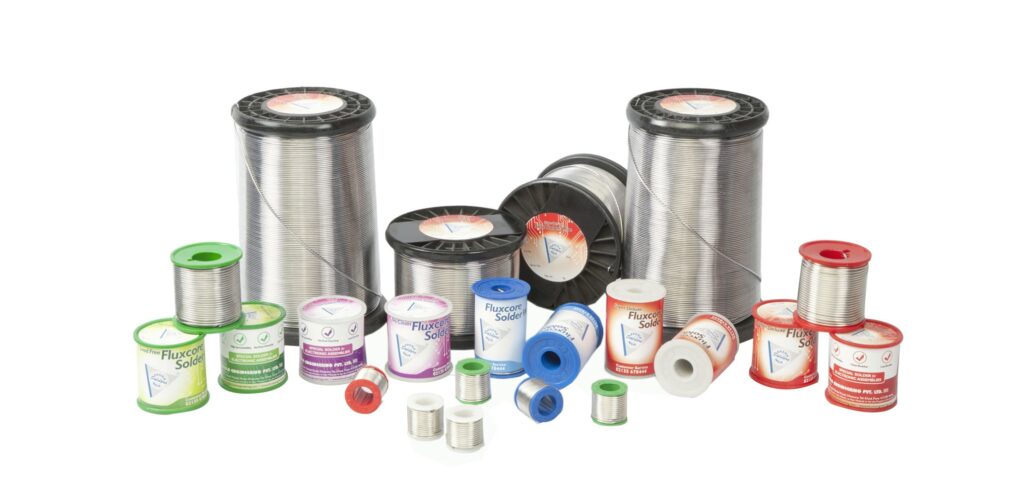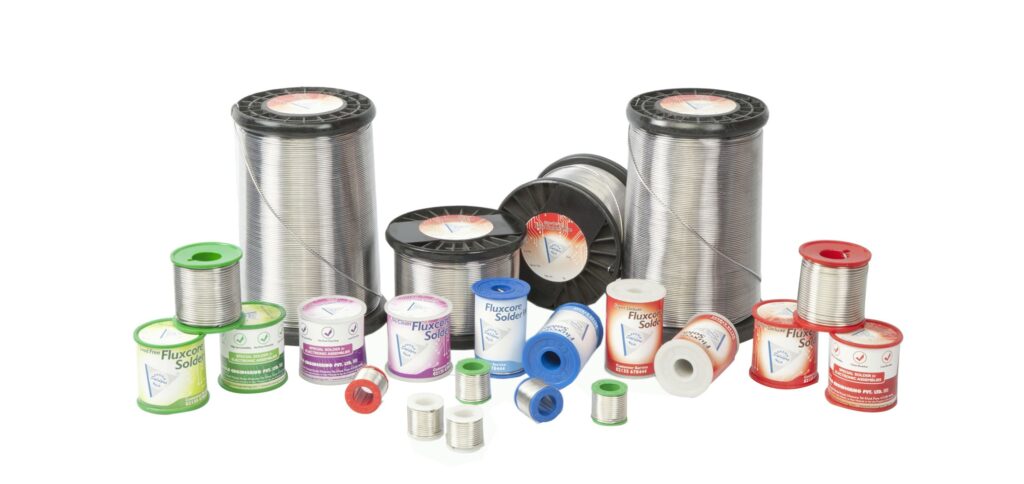
Solder Wire Manufacturers: A Vendor Evaluation Checklist
Choosing between solder wire manufacturers isn’t a decision to make on price and delivery date alone – not when the wire you select directly affects joint reliability, production yield, and long-term product performance across every unit that leaves your line.
The same holds true if you’re sourcing thermal spray metallizing wire – zinc, aluminium, or zinc aluminium alloys used in corrosion protection coatings. In both cases, the manufacturer behind the product matters as much as the product specification itself.
This checklist walks procurement, quality, and production teams through exactly what separates a reliable manufacturer from a vendor who simply resells someone else’s material, whether you’re buying solder wire, flux, or thermal spray wire.
Why Manufacturer Evaluation Matters Beyond the Spec Sheet
A specification sheet tells you what a product is supposed to do. It doesn’t tell you whether the manufacturer behind it can consistently deliver that performance across every batch, every order, and every reorder cycle. That consistency – not the spec sheet alone – is what determines whether your production line runs smoothly or fights avoidable defects.
This distinction matters equally whether you’re sourcing solder wire for electronics assembly or thermal spray zinc aluminum wire for corrosion protection coatings – both depend on manufacturing discipline that a data sheet can’t fully capture.
Manufacturing Control: In-House vs Reseller
The first and most important distinction among solder wire manufacturers is whether they actually manufacture the product in-house or resell material sourced from elsewhere. In-house manufacturers control raw material sourcing, alloy composition, drawing or extrusion processes, and quality testing directly. Resellers depend on whatever consistency their upstream source provides, often without full visibility into it.
This distinction applies just as directly to thermal spray wire – a zinc wire manufacturer producing wire in-house can control purity and diameter consistency in ways a trading supplier simply cannot guarantee.
Checklist Item 1: Alloy Composition and Purity Documentation
Request batch-specific composition data for solder alloys (tin-lead or lead-free SAC formulations) or thermal spray wire alloys (pure zinc, pure aluminium, or zinc-aluminium blends). A reliable manufacturer provides this as standard documentation, not on request only after pressure.
Checklist Item 2: Quality Control and Testing Processes
Ask what specific tests are performed on each production batch – diameter measurement, purity verification, wetting or spray performance testing. Manufacturers with documented, repeatable testing processes are far more likely to deliver consistent results across a large order.
Checklist Item 3: Production Capacity and Consistency
Confirm the manufacturer’s actual production capacity can support your order volume and reorder frequency reliably. A manufacturer stretched beyond their real capacity often shows it through inconsistent lead times or quality drift under pressure.
Checklist Item 4: Batch Traceability
Every batch of solder wire or thermal spray wire should be traceable to its specific production run. If a quality issue surfaces later – whether it’s a solder joint failure or an inconsistent metallizing coating – traceability lets you investigate the root cause quickly rather than guessing.
Checklist Item 5: Technical Support and Application Expertise
A manufacturer worth working with long-term offers technical guidance, not just order fulfillment. This might mean helping you select the right flux for solder wire, or recommending the right thermal spray metallizing wire diameter and alloy for your specific spray equipment and environmental exposure conditions.
Checklist Item 6: Compliance and Certification
For solder wire, confirm RoHS compliance documentation for lead-free products, verifiable rather than simply claimed. For thermal spray wire, ask what recognized industry standards the manufacturer tests against, and whether that testing is independently verified.
Checklist Item 7: Track Record Across Industries
A manufacturer with proven experience across relevant industries – electronics, automotive, HVAC, galvanizing, or thermal spray coating – brings practical knowledge that generic suppliers often lack. Ask for references or examples from applications similar to yours.
Evaluating Manufacturers for Thermal Spray Wire Specifically
Buyers sourcing thermal spray metallizing wire – including thermal spray zinc aluminum wire, zinc wire for thermal spray metalizing, and spray zinc aluminum wire – should apply a few additional checks beyond the general checklist above:
- Wire diameter consistency, since inconsistent diameter causes uneven feed rates through spray equipment and directly affects coating thickness.
- Spray performance data, if available, showing how the wire performs under typical thermal spray conditions rather than just chemical composition on paper.
- Alloy ratio accuracy for zinc-aluminium blends, since different ratios are suited to different corrosion environments and deviations affect long-term coating performance.
- Spool winding quality, which affects unwinding consistency during automated spray processes and is easy to overlook on a standard spec sheet.
Manufacturers experienced specifically in thermal spray wire production can often advise on the right alloy and diameter combination for your structure’s environmental exposure, which general-purpose metal suppliers typically cannot.
Common Mistakes When Evaluating Manufacturers
- Choosing based on price without verifying manufacturing control. Lower prices from resellers often reflect inconsistent upstream sourcing rather than genuine cost efficiency.
- Not requesting batch-specific documentation. A single reference test result doesn’t guarantee consistency across your actual order.
- Assuming all “manufacturers” actually manufacture in-house. Some vendors use the term loosely while functioning primarily as resellers.
- Overlooking technical support needs. Application-specific guidance can prevent costly trial-and-error, particularly for less common alloy or specification requirements.
- Ignoring production capacity verification for large or recurring orders. A manufacturer’s promised delivery timeline is only as reliable as their actual capacity behind it.
Frequently Asked Questions
1. What should I look for when evaluating solder wire manufacturers?
Look for in-house manufacturing control, batch-specific purity documentation, consistent quality testing processes, sufficient production capacity, technical support, and verifiable compliance certification.
2. What is the difference between a solder wire manufacturer and a reselling supplier?
A manufacturer produces wire in-house with direct control over alloy composition and quality, while a reselling supplier sources finished product from other producers, often with limited visibility into original manufacturing consistency.
3. What should I check specifically when sourcing thermal spray metallizing wire?
In addition to general manufacturer checks, verify diameter consistency, spray performance data, alloy ratio accuracy for zinc-aluminium blends, and spool winding quality.
4. Why does batch traceability matter when choosing a manufacturer?
Batch traceability allows you to investigate the root cause of a quality issue – whether a solder joint failure or an inconsistent metallizing coating – back to a specific production run.
5. How do I verify a zinc wire manufacturer’s purity and consistency claims?
Request batch-specific certificates of analysis, ask about independent testing verification, and consider running a sample trial on your own equipment before committing to a bulk order.
6. Does production capacity matter for a one-time versus recurring order?
Yes, but it matters more for recurring or bulk orders, since a manufacturer’s actual capacity to sustain consistent quality and lead times becomes more critical the larger and more frequent your order volume.
7. Should I choose one manufacturer for both solder wire and thermal spray wire needs?
If a manufacturer has proven expertise and documented quality control across both product categories, consolidating sourcing can simplify vendor management, though the evaluation criteria for each product type should still be checked independently.
8. What certifications should reliable solder wire manufacturers provide?
RoHS compliance documentation for lead-free products, along with batch-specific composition and quality testing certificates, are standard documentation a reliable manufacturer should provide on request.
Conclusion
Evaluating solder wire manufacturers – or thermal spray wire suppliers – on manufacturing control, documentation, and technical support rather than price alone protects your production line from costly, hard-to-trace quality issues down the road. This checklist gives procurement and quality teams a practical framework for that evaluation, whatever specific product you’re sourcing.
Kothari Metsol Pvt. Ltd. has manufactured solder wires, fluxes, and thermal spray metallizing wire since 1967, combining German technical heritage with stringent quality control to serve electronics, automotive, galvanizing, and industrial manufacturing sectors across India. Whether you’re sourcing solder wire, zinc wire for thermal spray metalizing, or spray zinc aluminum wire, our technical team can help you evaluate the right fit for your application.
Explore our full range of solder wire and thermal spray metallizing wire, and request technical guidance or a quotation.